PittMobility Site Consultation Report
A semester-long usability and accessibility consultation for the University of Pittsburgh's transportation and parking website.
Skills
- UX Research
- Heuristic Evaluation
- Usability Testing
- Persona Development
- Technical Writing
Methods
- SUS Surveys
- Think-Aloud Testing
- Accessibility Audit
- Client Presentation
Project Overview
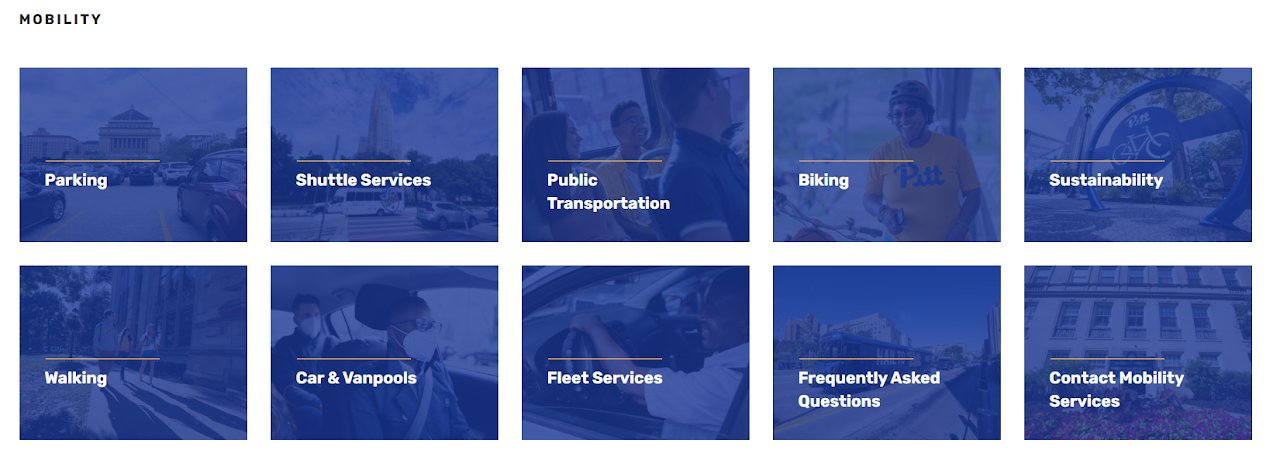
As part of ENGCMP 1430: Usability Testing in Technical Writing, I worked on a semester-long client consultation project with Pitt Mobility, the University of Pittsburgh's transportation and parking services website. This project challenged my team to move beyond academic analysis and into real-world UX research by evaluating a live site used daily by thousands of students and staff.
We partnered directly with Pitt Mobility as consultants, beginning with an introductory meeting to understand the site's purpose, target users, and existing concerns. From there, we conducted a structured heuristic evaluation and user research testing to identify usability and accessibility barriers. Our findings were delivered through both a formal written report and a client-facing oral presentation, reinforcing recommendations through multiple modes of communication.
My Role and Contributions
I contributed across all stages of the project, allowing me to build a strong foundation in UX research and technical communication. My work included:
- Conducting usability and accessibility heuristic evaluations
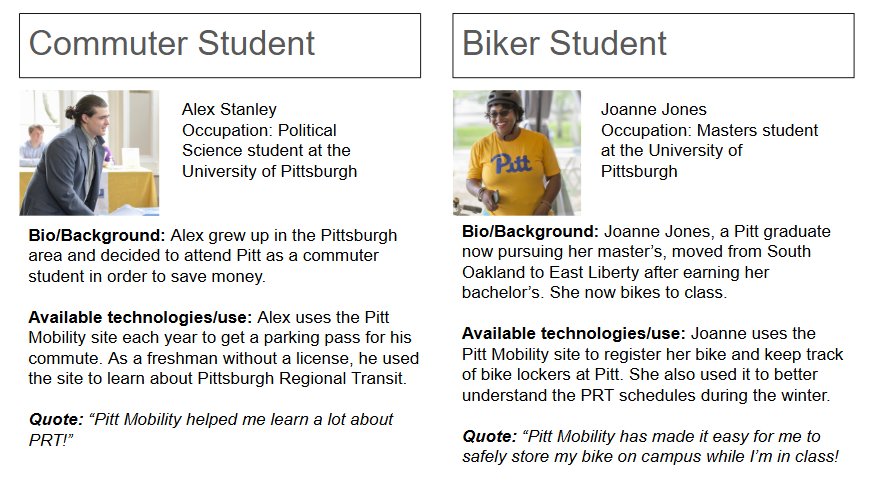
- Developing personas and scenarios to represent key user groups, such as commuter and biking students
- Facilitating scenario-based user testing sessions
- Administering and analyzing System Usability Scale (SUS) surveys
- Synthesizing qualitative and quantitative findings into actionable recommendations
- Co-authoring the final written report and supporting the oral presentation delivered to the client
Key Findings
Through our research, we uncovered several recurring issues that impacted user experience:
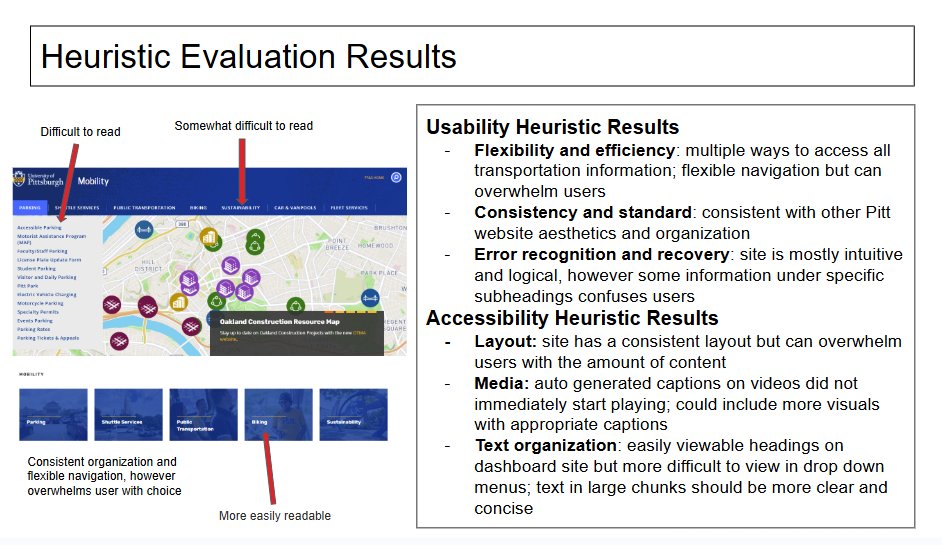
- The site's dense layout and multiple navigation paths overwhelmed users and reduced efficiency
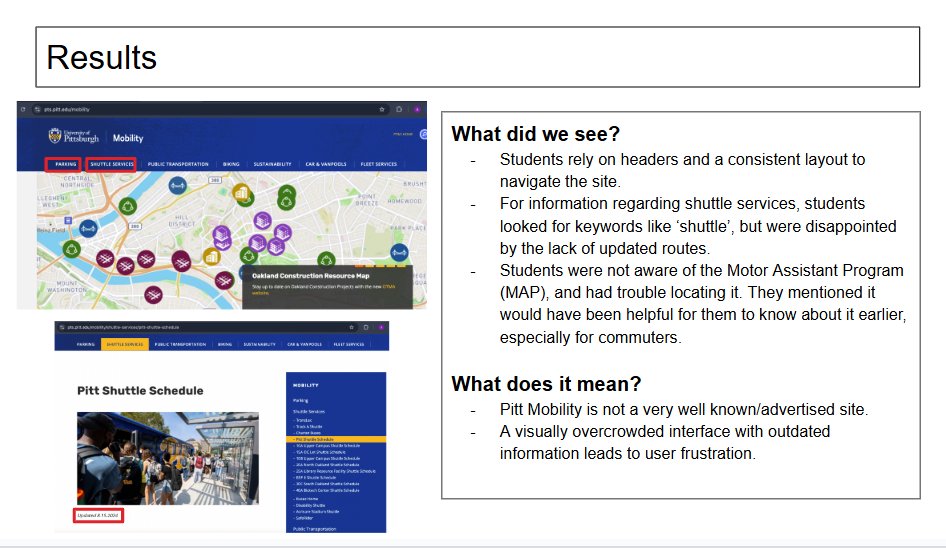
- Critical information, such as shuttle updates and construction notices, was outdated or difficult to locate
- Important services like the Motor Assistance Program (MAP) were not easily discoverable
- Accessibility concerns included inconsistent fonts, long text blocks, and missing or delayed captions on embedded media
These findings highlighted how even well-intentioned, information-rich sites can become barriers when clarity and accessibility are not prioritized.
Our Recommendations
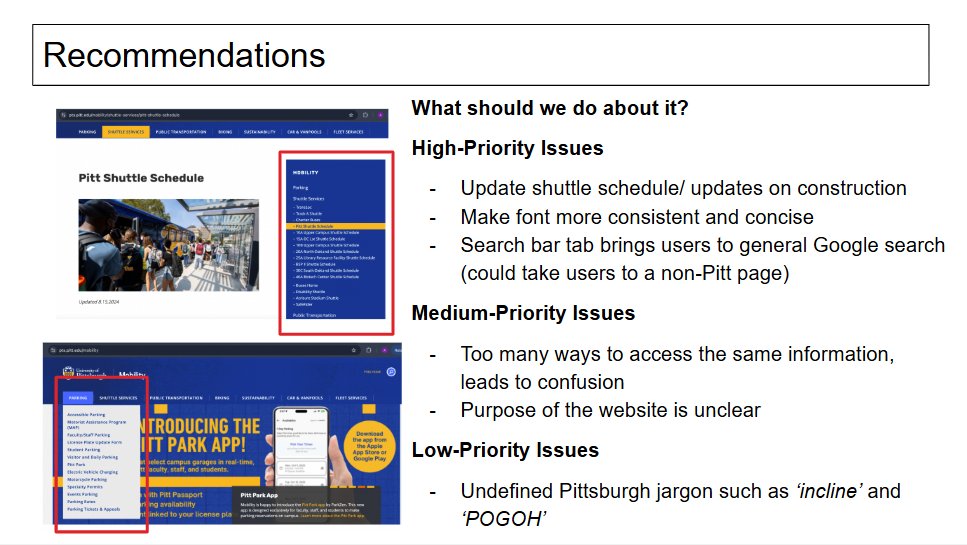
Our team developed prioritized recommendations to address both immediate and long-term concerns, including improving information hierarchy, streamlining navigation, enhancing accessibility features, and refining search functionality.
A key learning outcome for me was presenting the same insights in different formats to reinforce understanding. Writing a detailed technical report required precision, structure, and evidence, while preparing the presentation forced us to translate those findings into clear, digestible visuals and spoken explanations for a non-technical audience. This dual-delivery approach strengthened my ability to adapt information for different stakeholders without losing its core message.
Final Takeaways
This project strengthened my ability to conduct user-centered UX research and communicate findings effectively. Facilitating think-aloud usability testing taught me how to observe real user behavior without leading participants, while analyzing System Usability Scale (SUS) data helped me balance qualitative insights with measurable outcomes. Translating our findings into both a formal written report and a client-facing presentation pushed me to adapt the same information for different audiences and mediums by using structured, evidence-based writing in the report and clear visuals and concise explanations in the presentation. Presenting insights across multiple formats reinforced the importance of accessibility, clarity, and repetition when communicating complex ideas. Overall, this experience deepened my understanding of usability and inclusive design and strengthened my confidence in conducting UX testing and advocating for user needs in real-world settings!