Table Tracker
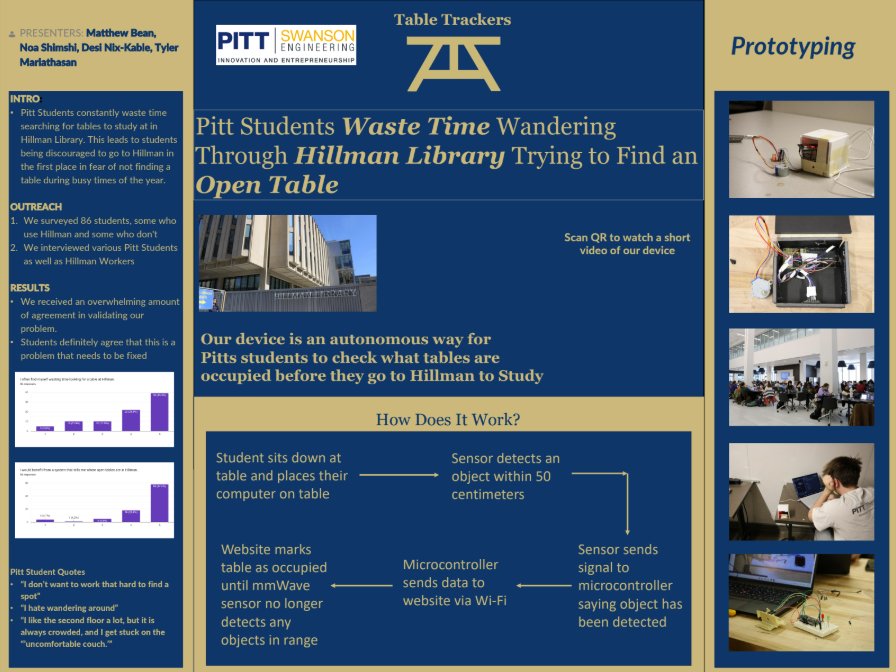
A smart table tracking system that uses sensors to detect table availability and share real-time status updates.
Skills
- Sensor Evaluation
- Embedded Programming
- Mechanical Design
- 3D Modeling
- Web Development
- Prototyping
Tools
- ESP32
- mmWave Sensor
- Stepper Motor
- 3D Printer
- Foam Core
Introduction to the Problem
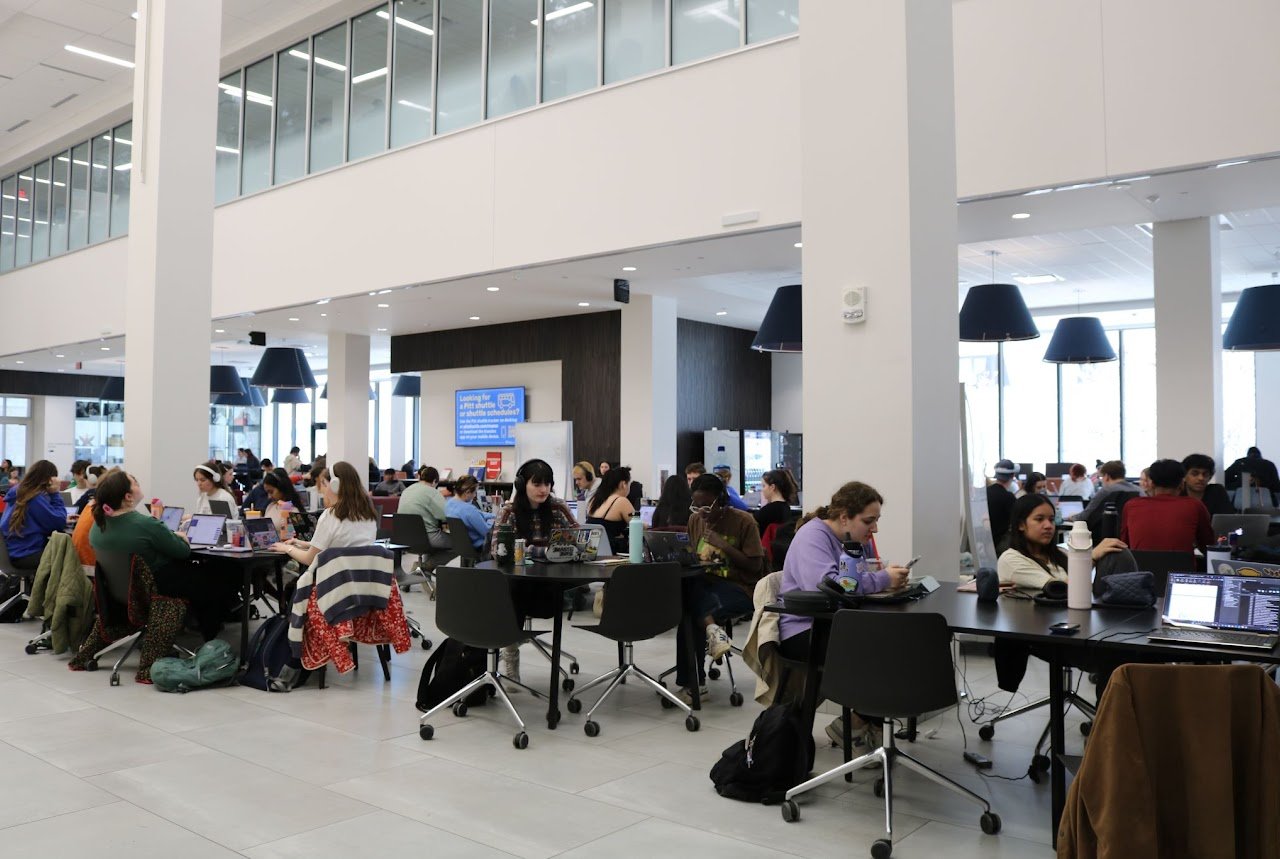
During my first semester at Pitt, I repeatedly found myself arriving at Hillman Library during a busy study period, backpack full and mind ready to work, only to waste precious time wandering from floor to floor searching for an available table.
Our research revealed that students were actually avoiding the library altogether during peak times, fearing they wouldn't find anywhere to sit. As one student put it, "I don't want to work that hard to find a spot." Another complained, "I hate wandering around," while others reported settling for uncomfortable seating options when their preferred spots were taken.
The Idea
What if students could know which tables were available before even entering the library? This question sparked the development of Table Trackers, an autonomous system that monitors table occupancy in real-time and makes this information accessible to students via an intuitive web interface.
Testing and Prototyping
Our development process focused on creating an effective and reliable detection system:
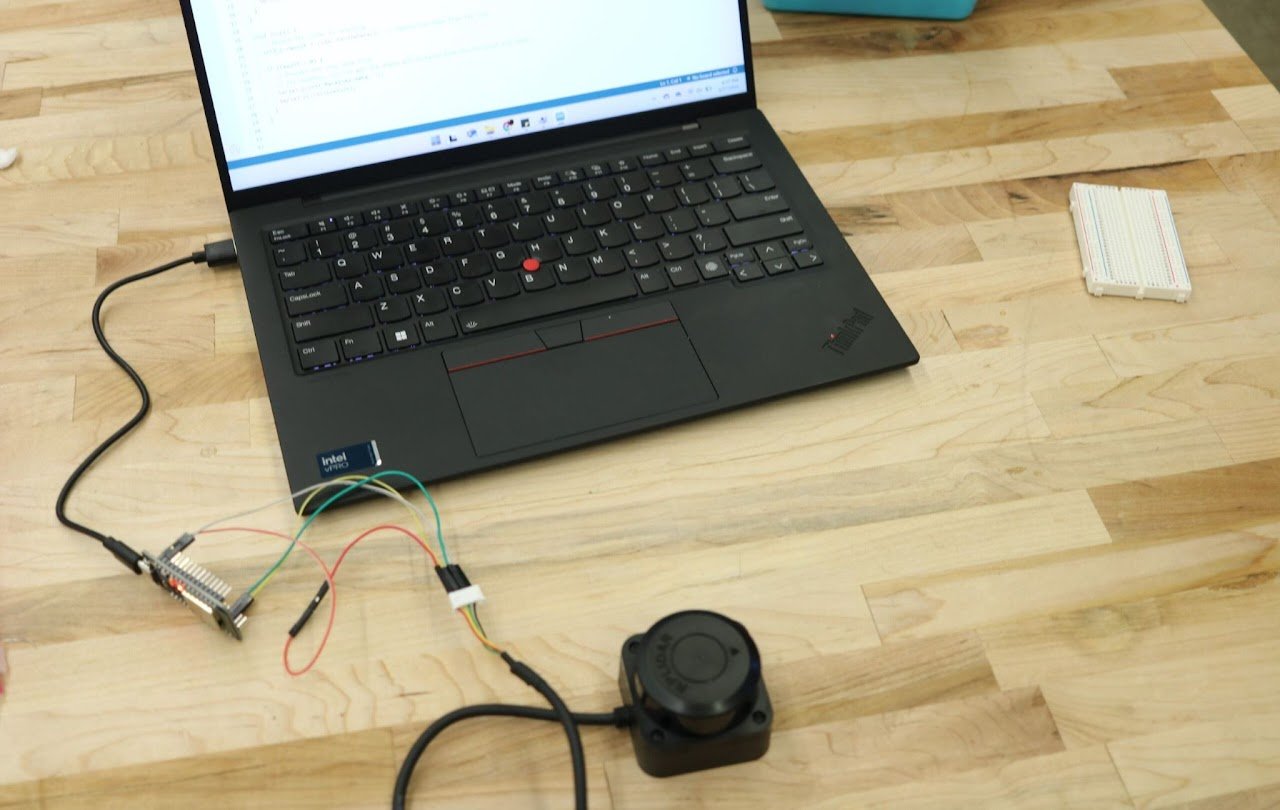
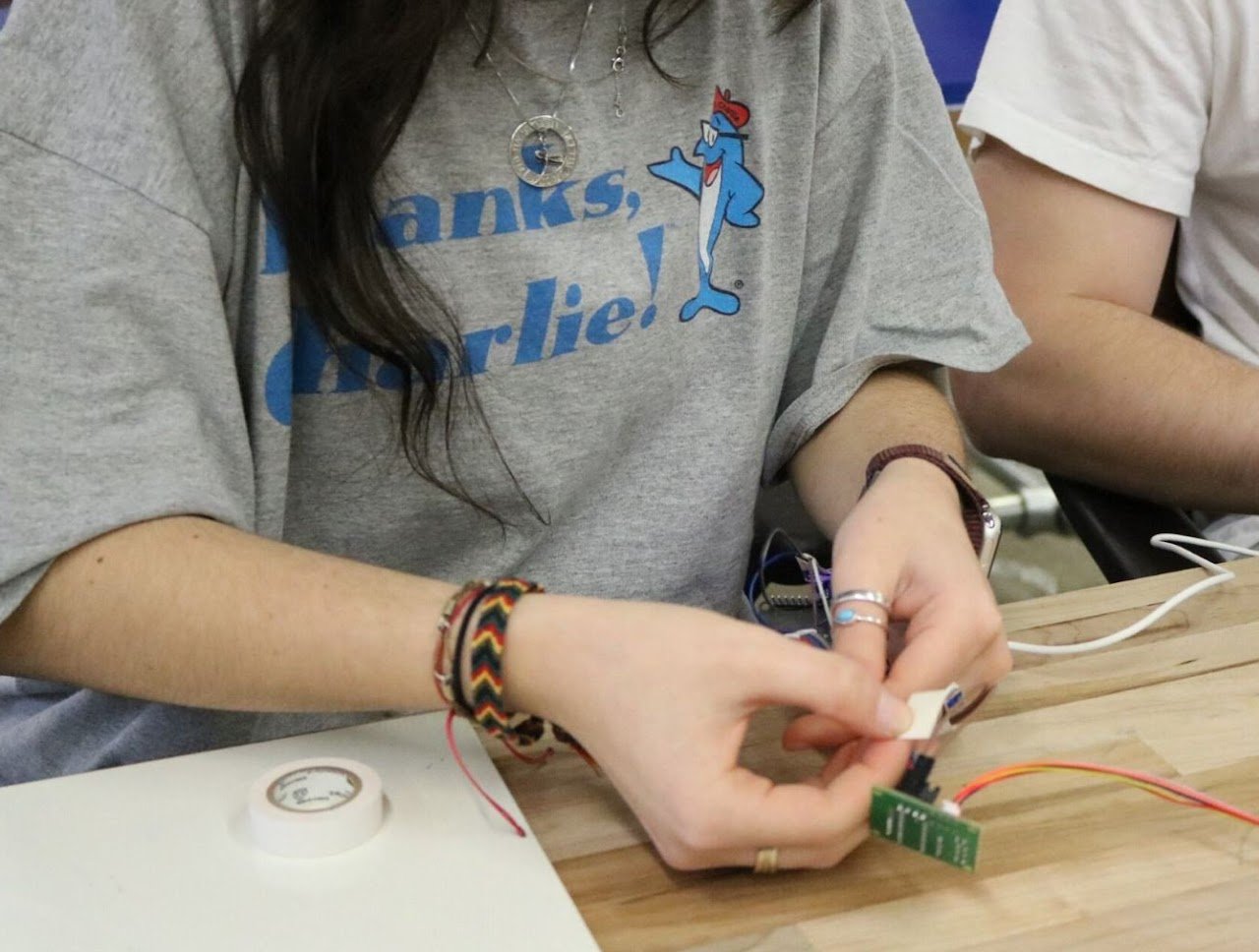
- Sensor Evaluation: We tested multiple technologies (LiDAR, mmWave, load cells, infrared) before selecting mmWave sensors for their superior compatibility with our ESP32 microcontroller.
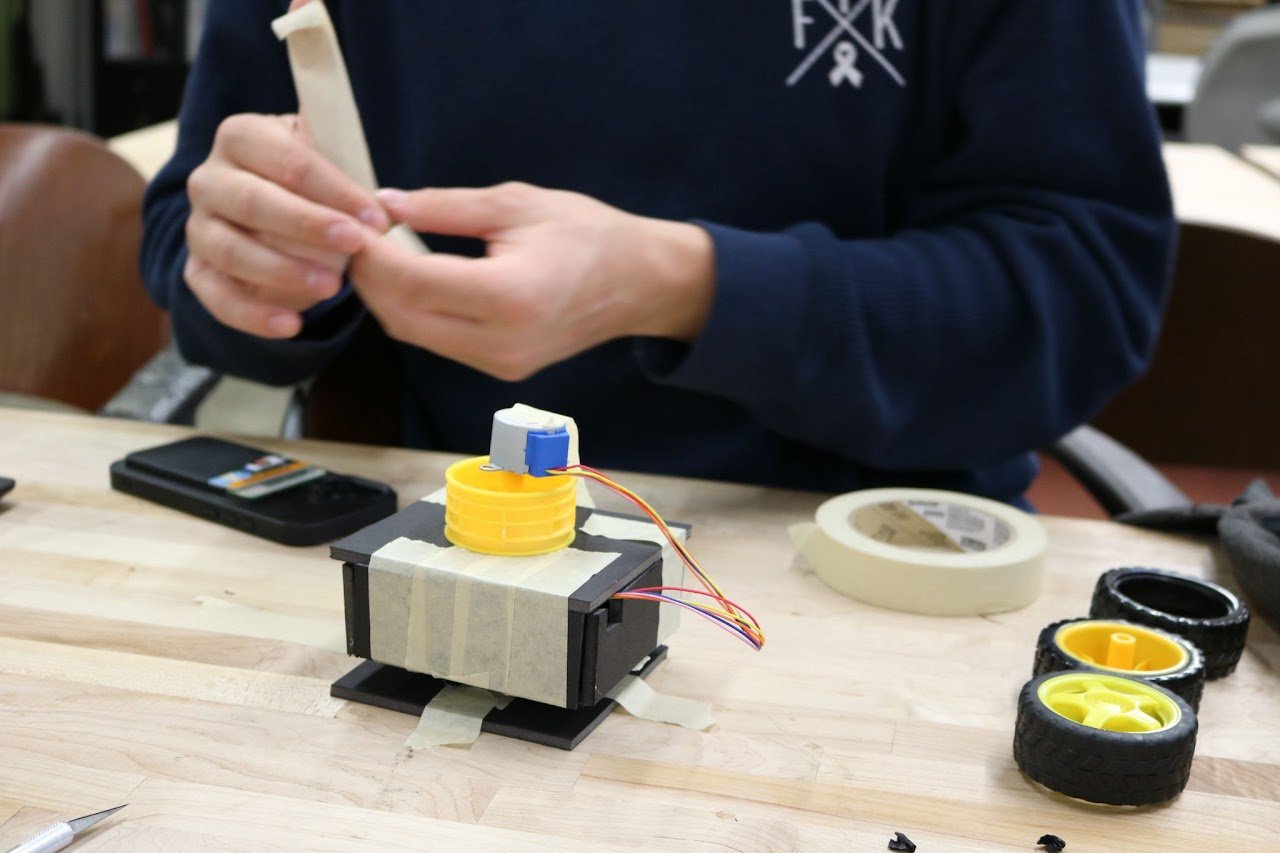
- Rotating Prototype: We created a mechanical system using foam core, a RedBot wheel, and a stepper motor that rotates the sensor 360 degrees to monitor the entire table area with a single sensor.
- Software Development: We programmed the ESP32 to process proximity measurements from the mmWave sensor and update our website in real-time, displaying a simple color-coded status indicator.
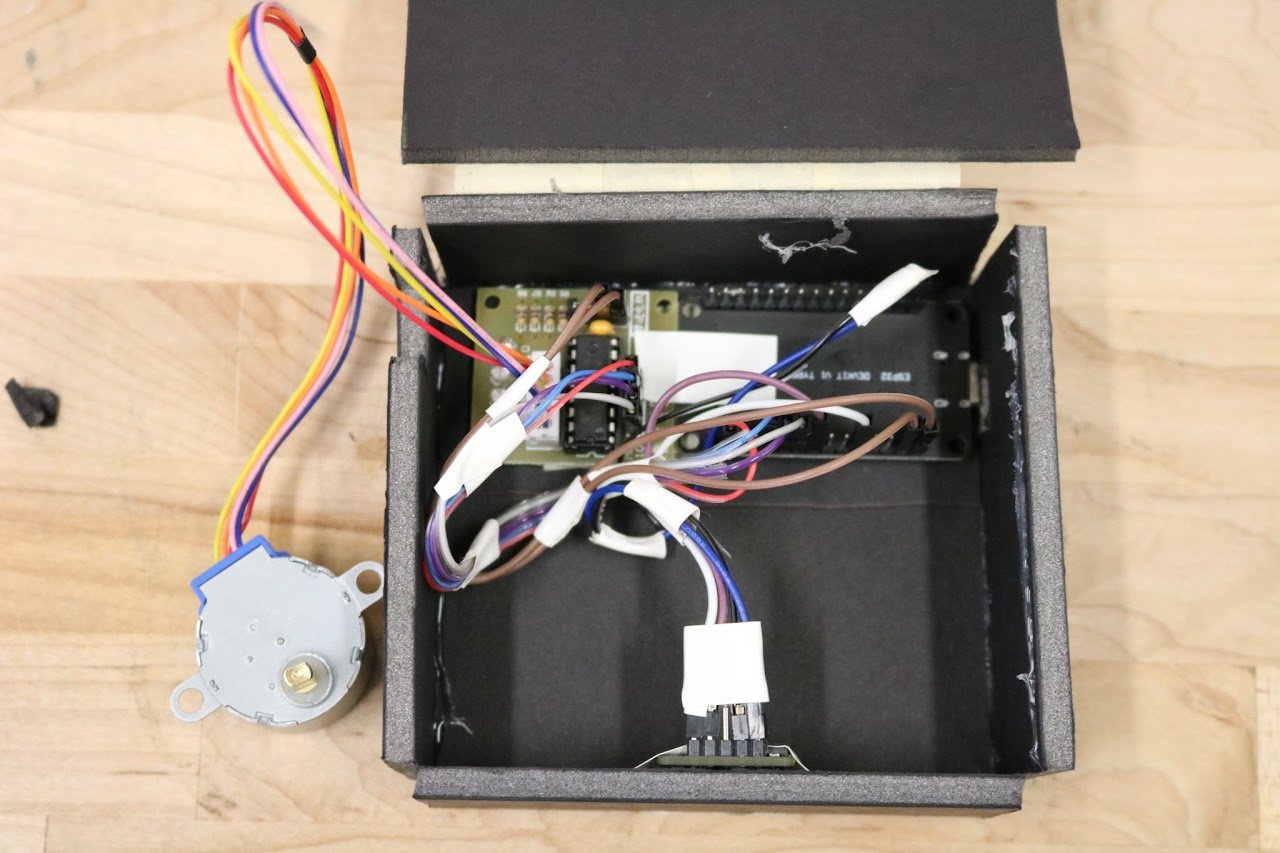
- Refinement: We designed and 3D-printed a professional enclosure with ball bearings for smooth rotation, creating a more durable and aesthetically pleasing final product.
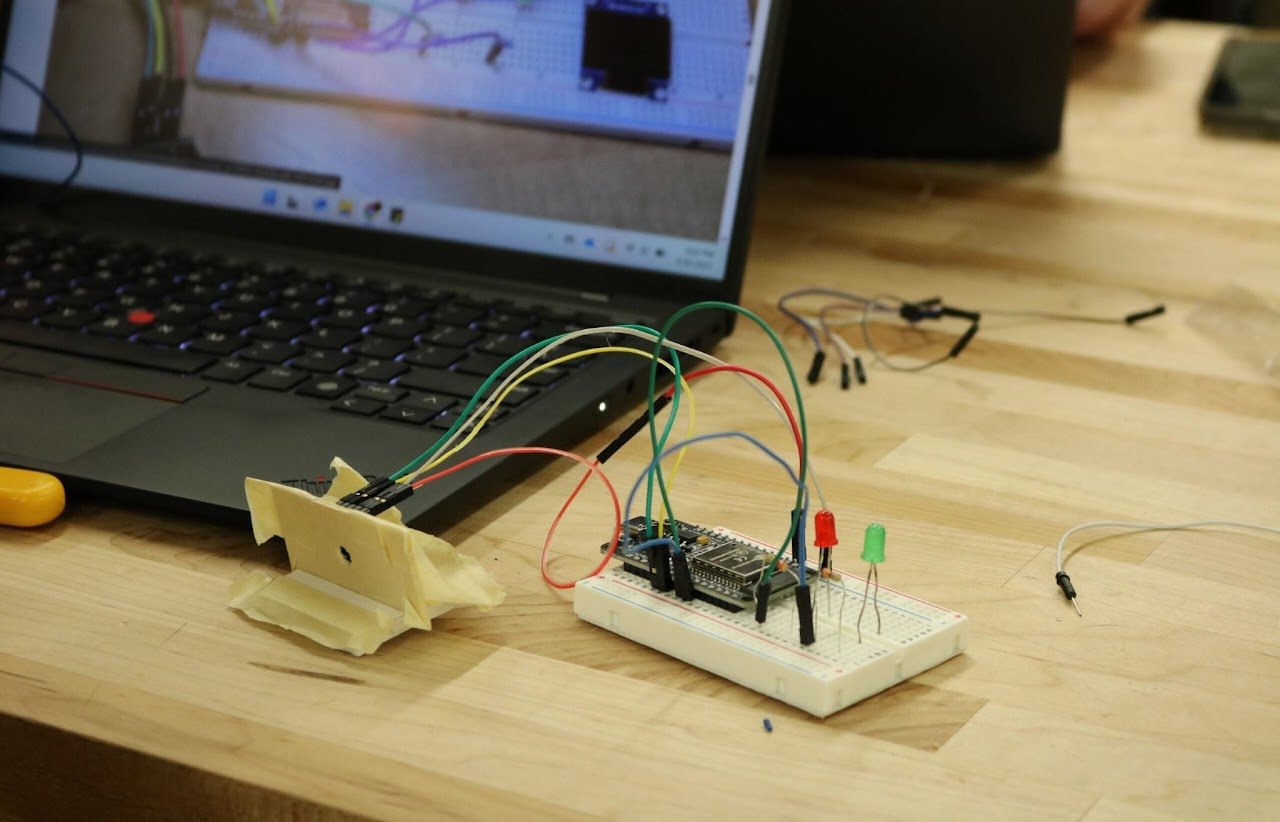
Our First Prototype
Challenges
We overcame several challenges during development:
- 360 Degree Coverage: We solved the challenge of monitoring an entire table by implementing a rotating sensor mechanism rather than using multiple fixed sensors.
- Device Linking: Connecting the sensor, microcontroller, and website required careful programming to ensure reliable real-time updates.
- Mechanical Design: We transitioned from a basic prototype to a custom 3D-printed enclosure that I designed. The print accommodated ball bearings to improve durability and appearance.
The Final Product
The Table Tracker operates through a straightforward process:
- A mmWave sensor rotates to scan the table area
- When objects are detected within 50 centimeters, the system registers occupancy
- The ESP32 transmits this data to our website
- The website displays table status using intuitive color-coding (green for available, red for occupied)
This solution provides Pitt students with the real-time information they need to make informed decisions about when and where to study, eliminating unnecessary wandering and frustration.
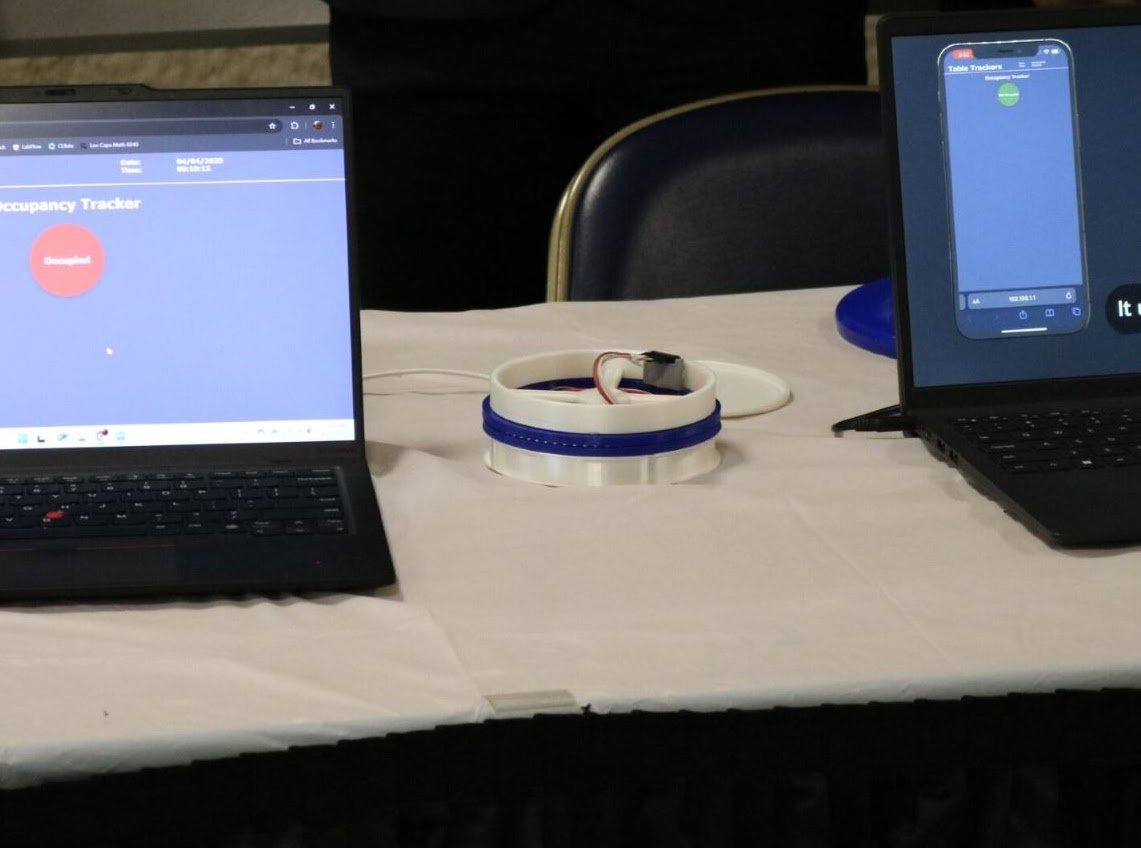
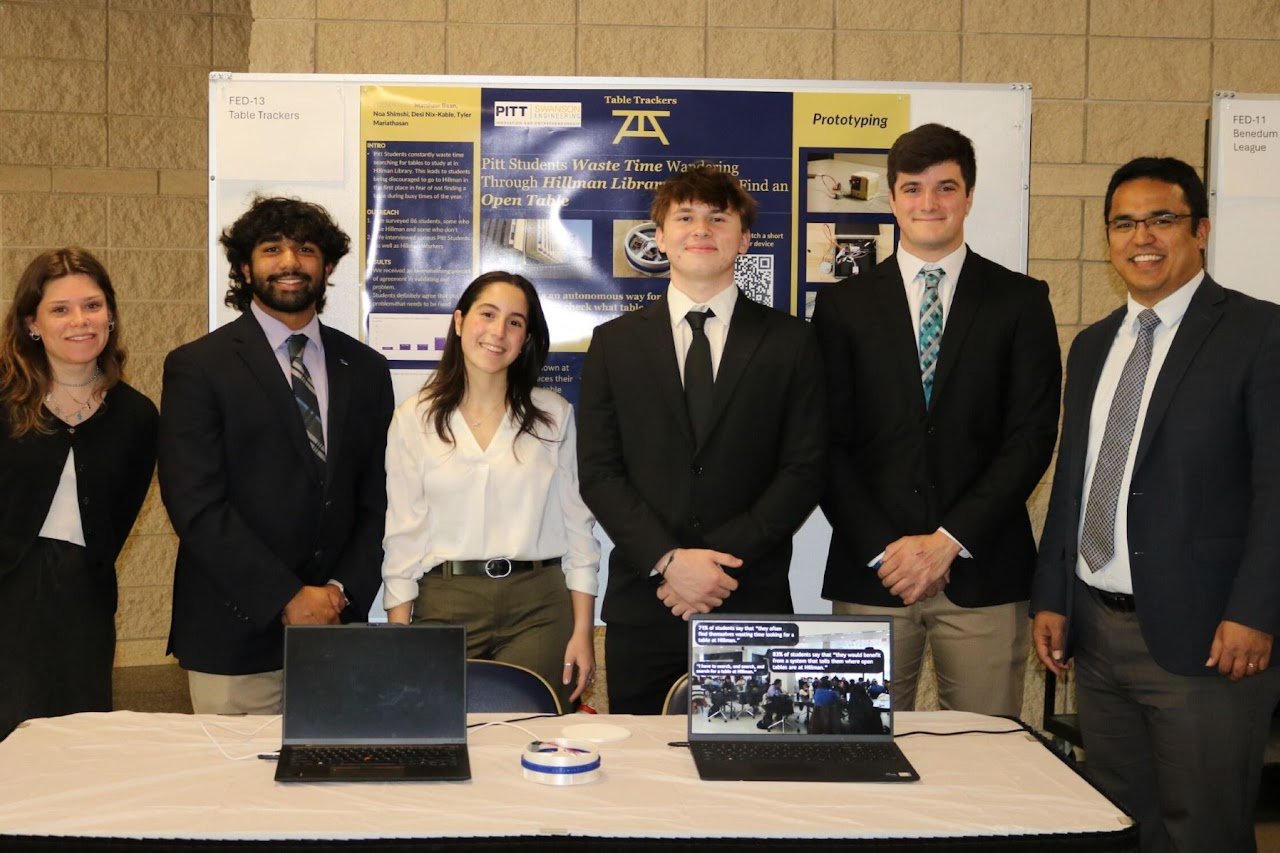
Presentation
My group and I presented our final design at the Swanson School of Engineering Design Expo, and it was such a cool experience. It gave me a real glimpse into what the next few years as an engineering student might look like. It was also really inspiring to see the projects my peers have been working on; there was so much creativity and hard work all around!